When vehicle owners choose between a car tire nitrogen generator and a regular air compressor for garage tire inflation work, they must understand their core functional differences, inflation quality, long‑term tire effects, running costs and suitable application scenarios. A standard air compressor pumps compressed ambient air directly into your car tires. Normal atmospheric air contains roughly 78% nitrogen, 21% oxygen, plus water vapor and other tiny impurities. Oxygen molecules are smaller and far more active than nitrogen molecules. Over weeks and months, oxygen slowly leaks out through the microscopic gaps of tire rubber, which causes tire pressure to drop gradually. Oxygen also speeds up rubber oxidation inside tires, slowly aging rubber components, breaking down inner liners and shortening the overall service life of tires. Air compressors are well‑known for their low purchase cost, wide‑ranging versatility and fast inflation speed. Apart from filling tires, they can power pneumatic tools, spray paint, blow dust and complete dozens of other garage‑based tasks. This multi‑function advantage makes air compressors a popular, all‑around tool for home garages.
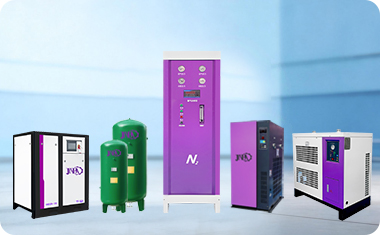
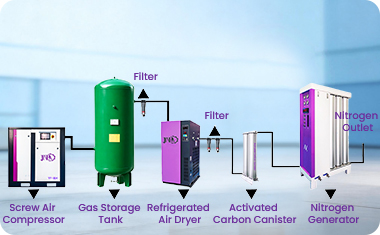
On the other side, a car tire nitrogen generator extracts high‑purity nitrogen gas from surrounding air and fills tires with nearly oxygen‑free gas. Most tire‑focused nitrogen generators can deliver nitrogen purity between 95% and 99.5%. Since nitrogen molecules are larger, they seep through tire rubber at a much slower speed. Tires inflated with nitrogen hold stable pressure for a much longer time. Drivers will spend less time checking tire pressure and topping‑up gas every few weeks. Dry nitrogen gas also contains almost no moisture, so inner tire rust on steel wheel rims is greatly reduced. Nevertheless, nitrogen generators are single‑purpose equipment for the most part. Their main job is nitrogen production, and they cannot run pneumatic power tools like an air compressor. The initial buying cost of a nitrogen generator is significantly higher than a basic home‑use air compressor.
Your final decision between these two machines depends heavily on your priorities and garage‑use habits. If you want a multi‑functional, budget‑friendly power tool to handle many different repair and maintenance jobs around your home garage, an air compressor is the more practical pick. If your top goal is to maintain long‑term stable tire pressure, slow tire aging and cut monthly tire‑checking work, a dedicated nitrogen generator will deliver better long‑term tire‑protection results. Many smart home garage users combine both devices: they keep an air compressor for general‑purpose work, and use a nitrogen generator to add nitrogen gas to vehicle tires for long‑distance driving. Neither tool completely replaces the other, and each one carries unique strengths and drawbacks for car tire inflation.