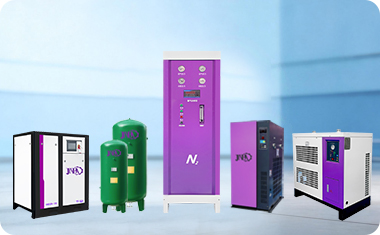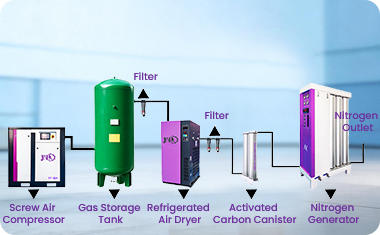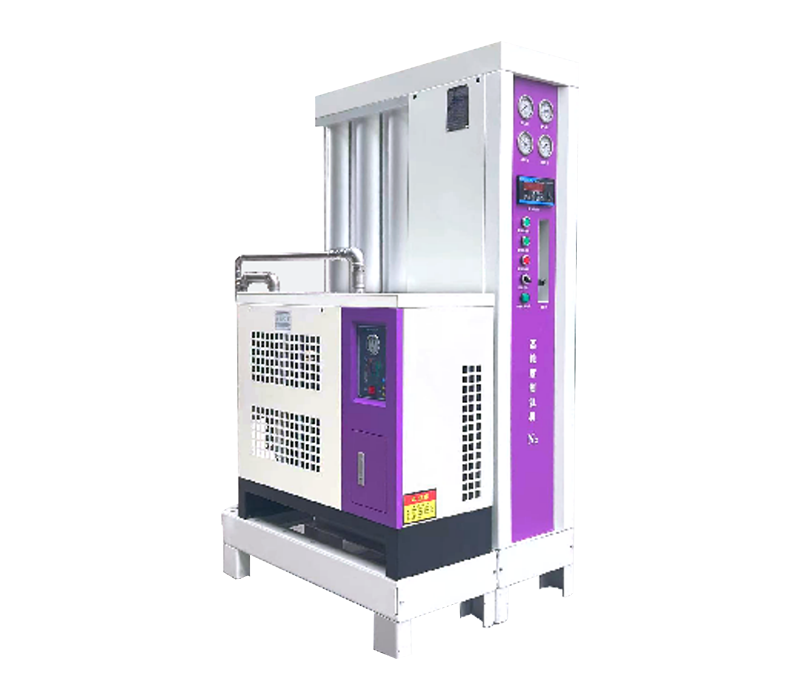
High-purity nitrogen generators are core auxiliary equipment in modern laboratories, widely applied in chromatographic analysis, mass spectrometry, material testing, and chemical reaction protection, with nitrogen purity directly determining the accuracy and stability of experimental results. Routine purity calibration is an essential quality control procedure to eliminate errors caused by long-term equipment operation, filter aging, and gas path leakage. Laboratory high-purity nitrogen generally requires a purity level above 99.999%, so the calibration method must adopt high-precision testing instruments and standardized operating procedures to ensure reliable and repeatable calibration data. The mainstream calibration technologies include trace oxygen detection, moisture content testing, and impurity gas chromatography analysis, which jointly verify the overall purity of nitrogen gas.
Trace oxygen detection is the most critical step in nitrogen purity calibration, as oxygen is the most common and influential impurity in nitrogen generated by laboratory equipment. A high-precision trace oxygen analyzer with a detection accuracy of 0.01 ppm is adopted for real-time monitoring. Before calibration, the nitrogen generator needs to run stably for 30 to 60 minutes to exhaust residual air in the gas path and stabilize the gas production state. The sampling pipeline must be made of inert materials such as PTFE to avoid secondary gas pollution and adsorption of trace impurities. During the test, record the oxygen concentration data every 5 minutes for three consecutive times. If the data fluctuation is less than 0.1 ppm and the average oxygen content meets the standard corresponding to the equipment’s rated purity, the oxygen impurity index is qualified.
Moisture and organic impurity calibration supplements the oxygen detection to complete full purity verification. A dew point meter is used to test the dew point temperature of nitrogen gas, converting dew point data into water vapor content to judge moisture impurities. High-purity nitrogen for laboratory use requires a dew point below -65℃, which corresponds to extremely low moisture content. For organic and inorganic trace impurities, gas chromatography with a high-sensitivity FID detector is used to detect residual hydrocarbons, carbon dioxide, and carbon monoxide in nitrogen. After completing all index tests, compare the measured data with the equipment’s rated purity parameters. If individual indexes deviate, adjust the molecular sieve adsorption time, gas flow rate, and pressure parameters of the nitrogen generator, and re-calibrate until all indexes reach the standard. Regular calibration every three months can effectively maintain the long-term stable operation of laboratory nitrogen generators.